
Medium: 3D animation, digital music, historical illustrations, AI software, dancer and motion capture system
Year: 2026
Duration: 5 minutes 40 seconds
2025 “Pey-Chwen Lin Solo Exhibition: Eve Clone Series—Pey-Chwen Lin’s AI Eden”, Chung Yuan Cultural And Creative Park, Taoyuan, Taiwan
Brief Art Statement :
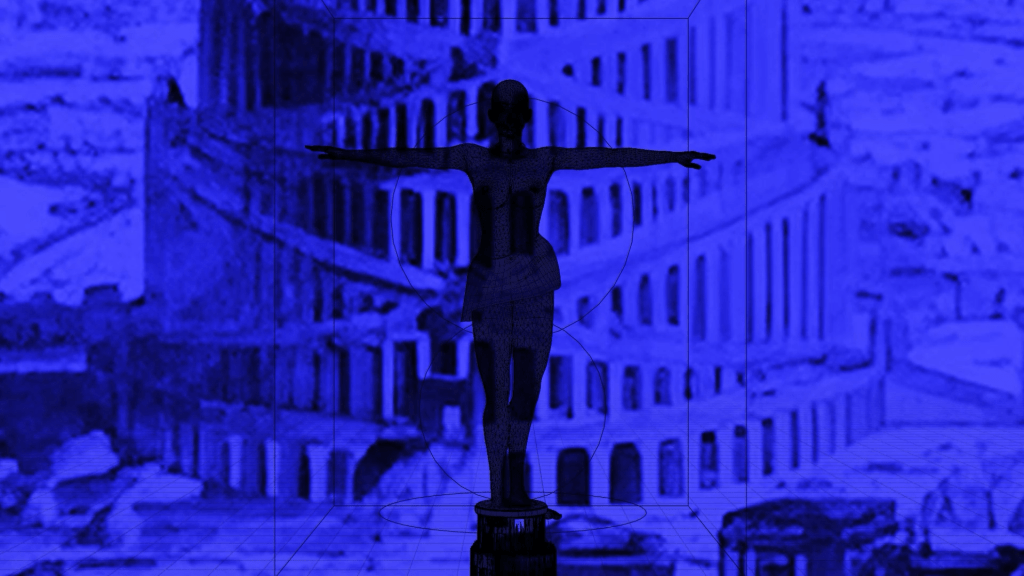
“Eve Clone” traces humanity’s enduring ambition to transcend limits and challenge divine authority. Emerging from stillness, the figure moves fluidly through layered spaces—from the ancient Tower of Babel to a digitally constructed metropolis composed of blue grids and global landmarks. These symbols of political, cultural, and technological power evoke contemporary “Babel Towers” that define our modern world.
As Eve Clone multiplies into numerous avatars, her movements orchestrate a network of control and domination, echoing apocalyptic imagery from the Book of Revelation. The work ultimately reveals a vision of humanity’s relentless pursuit of power—where technology, artificial intelligence, and global systems construct new forms of Babel, reflecting both our creative capacity and our hubris in confronting the divine order.
Art Statement:
“Eve Clone” begins in a state of stillness before gradually activating her body. She then drifts into the lower alleyways of the city, only to instantaneously jump back to the summit of the Babel Tower. Against a pitch-black background, blue grids and intersecting lines form a dense spatial network, suggesting her ability to traverse historical timelines freely—from antiquity to the present, and onward into the metaverse of the digital age.
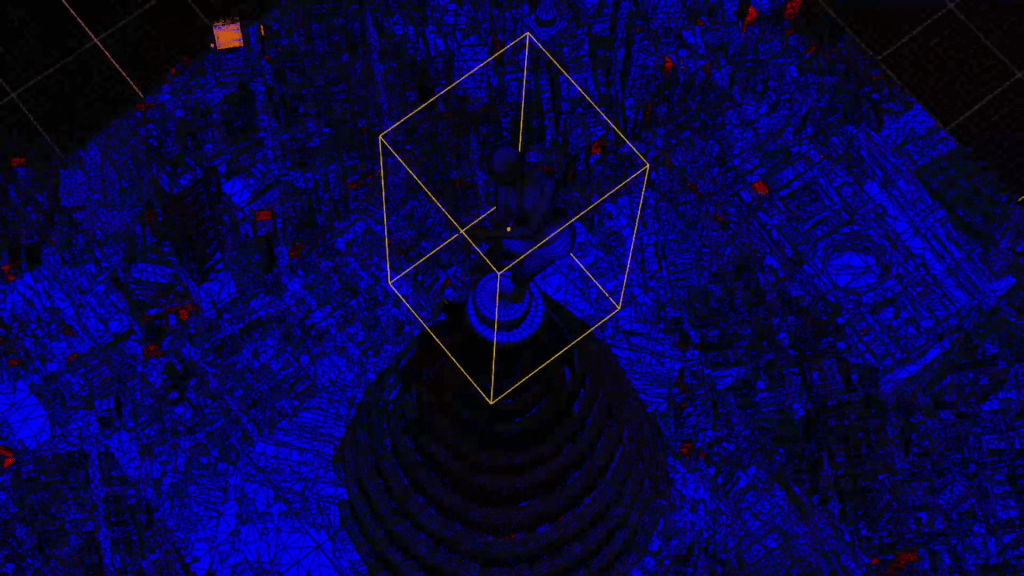
Beneath the Babel Tower is a city composed entirely of blue grids. The artist deliberately extracted precise, real-scale 3D city models from Google Maps, incorporating global landmarks that symbolize the “modern Babel Tower,” including the Empire State Building in New York, Taipei 101, the Chiang Kai-shek Memorial Hall in Greater Taipei, the Eiffel Tower in Paris, the United Nations Headquarters, the European Union buildings, Cologne Cathedral, the British Library, and Moscow’s Red Square. These landmarks function as enduring symbols of political and cultural power.
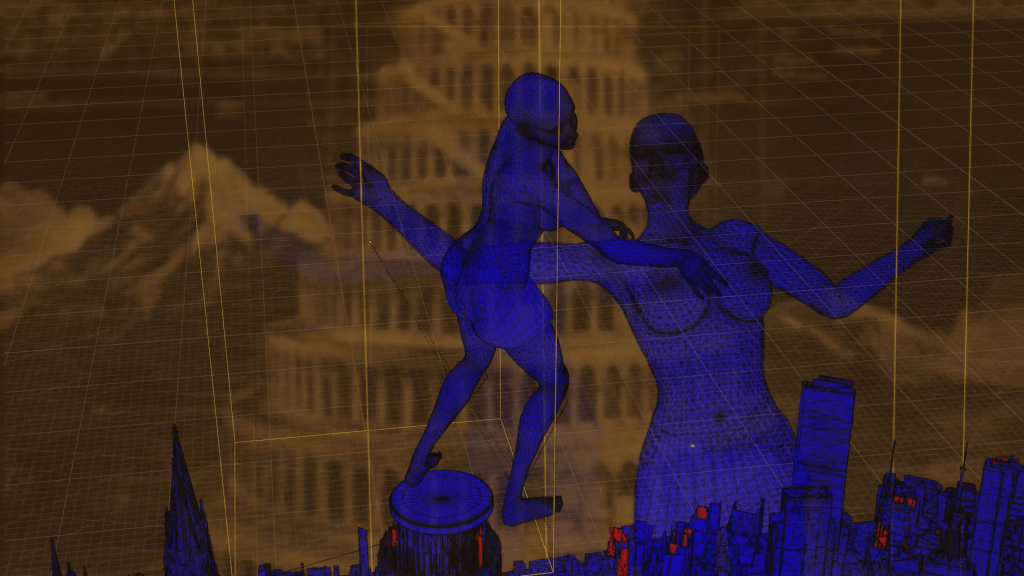
“Eve Clone” spins rapidly above the city before returning once again to the top of the Babel Tower. The background reverts to the ancient Tower of Babel, now interwoven with strange mountainous landscapes and fragments of text. Combined with AI-generated Babel Tower imagery, the scene produces a surreal visual environment.
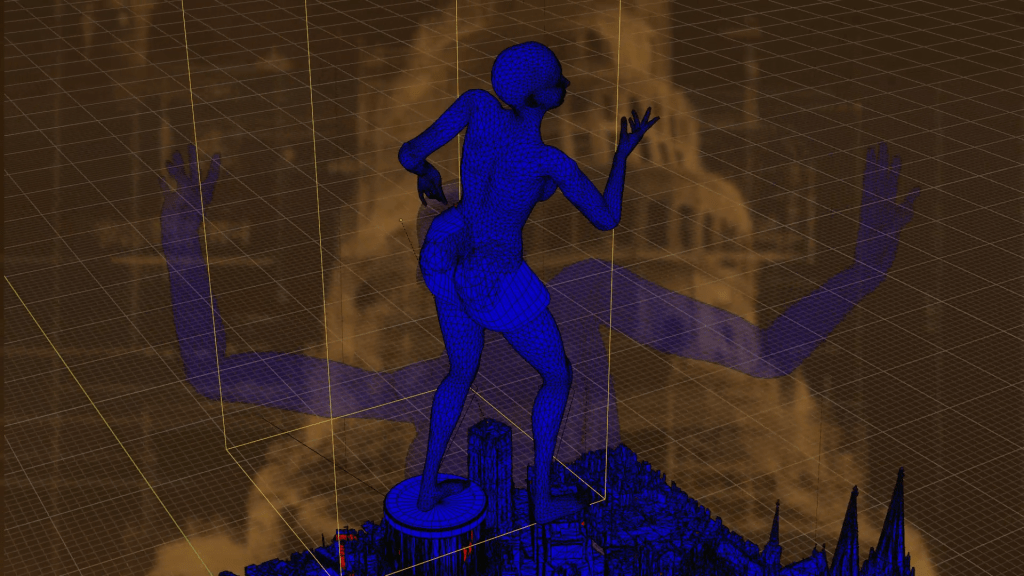
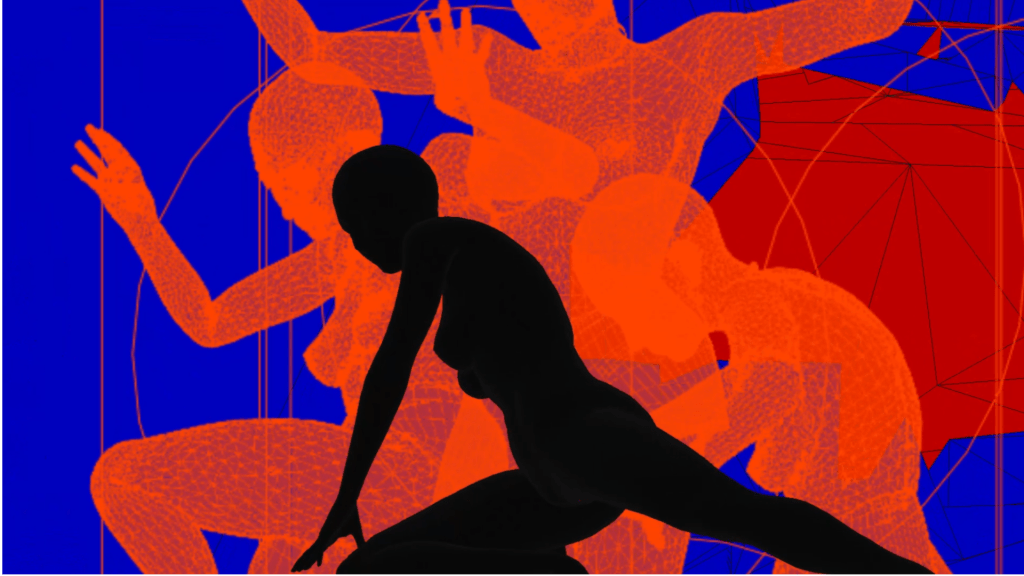
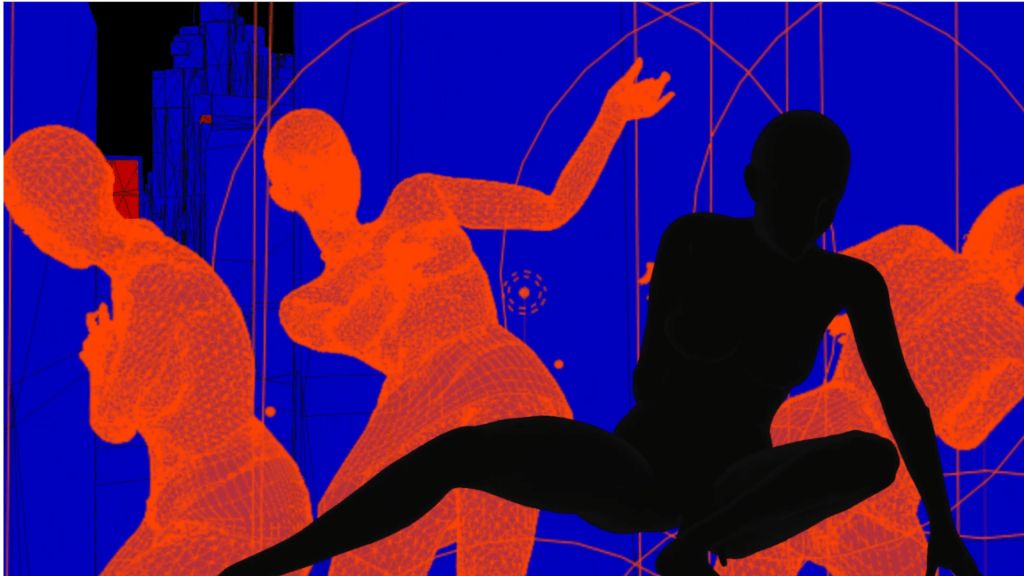
Subsequently, “Eve Clone” begins a duet with her second avatar. The original body then raises her hand, pointing toward an increasing number of clones, as if issuing commands and orchestrating their movements. The background music intensifies and layers in response to her bodily gestures, incorporating forceful sound effects that amplify a sense of authority and domination—echoing the woman described in the Book of Revelation who rules over the world:
“The woman you saw is the great city that rules over the kings of the earth.” (Revelation 17:18)
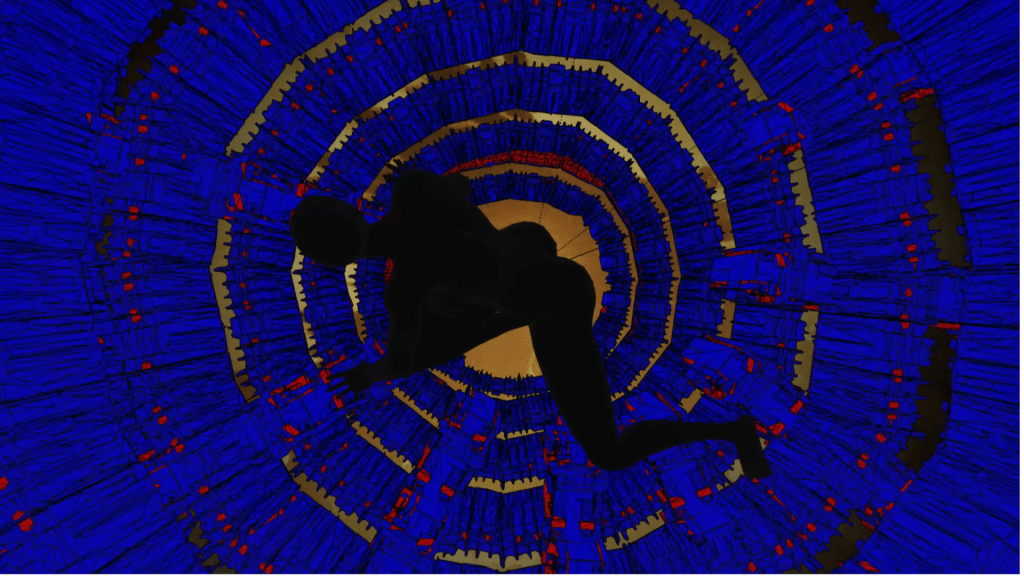
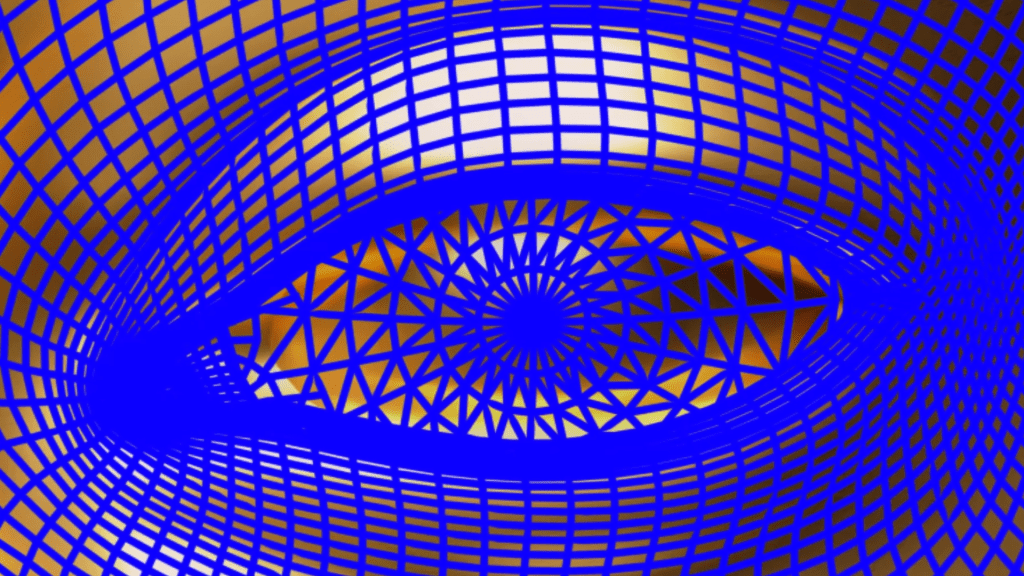
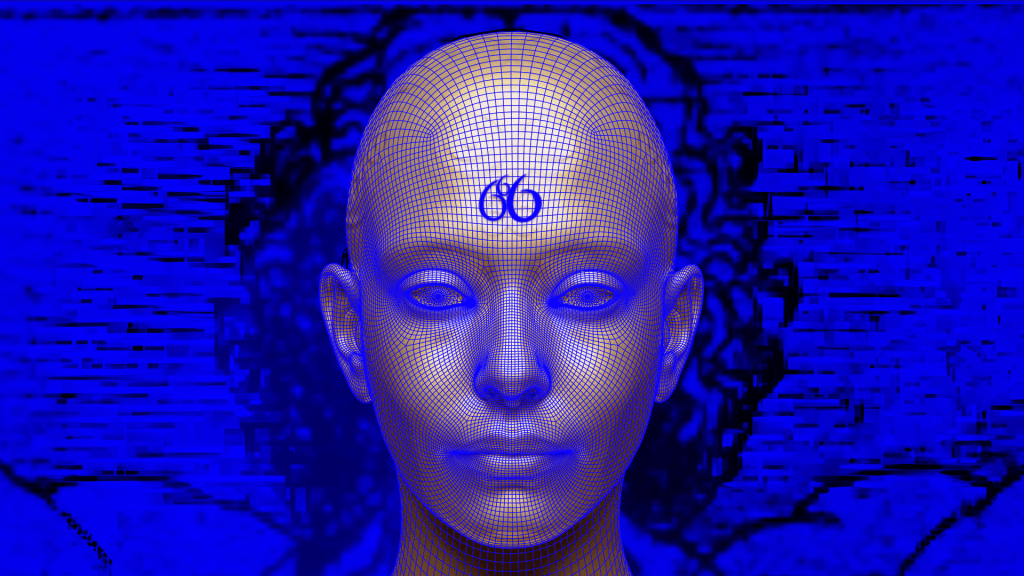
Thereafter, “Eve Clone” summons even more of her avatars and leads them into the lower strata of the city in search of prey to devour. Their movements are frantic and tense, while the soundscape accelerates and grows increasingly intense. Ultimately, the original “Eve Clone” ascends from within the Babel Tower to its summit. The circular image of the tower gradually transforms into her pupil, and in synchrony with the rhythmic progression of the music, an immense face of “Eve Clone” emerges—constructed of golden and blue grids. The mark of the Beast, “666,” appears on her forehead, and her cold, expressionless grid-like eyes embody an image of cruelty, authoritarian power, and artificiality. With the pulsating rhythm of the music, the figure gradually fades away.
The work as a whole reenacts humanity’s enduring desire to challenge divine authority, tracing a trajectory from the Tower of Babel in Genesis to today’s construction of ever-expanding “Babylons” and “Babel Towers” through politics, economics, culture, and technology.

 Lin, Pey-Chwen